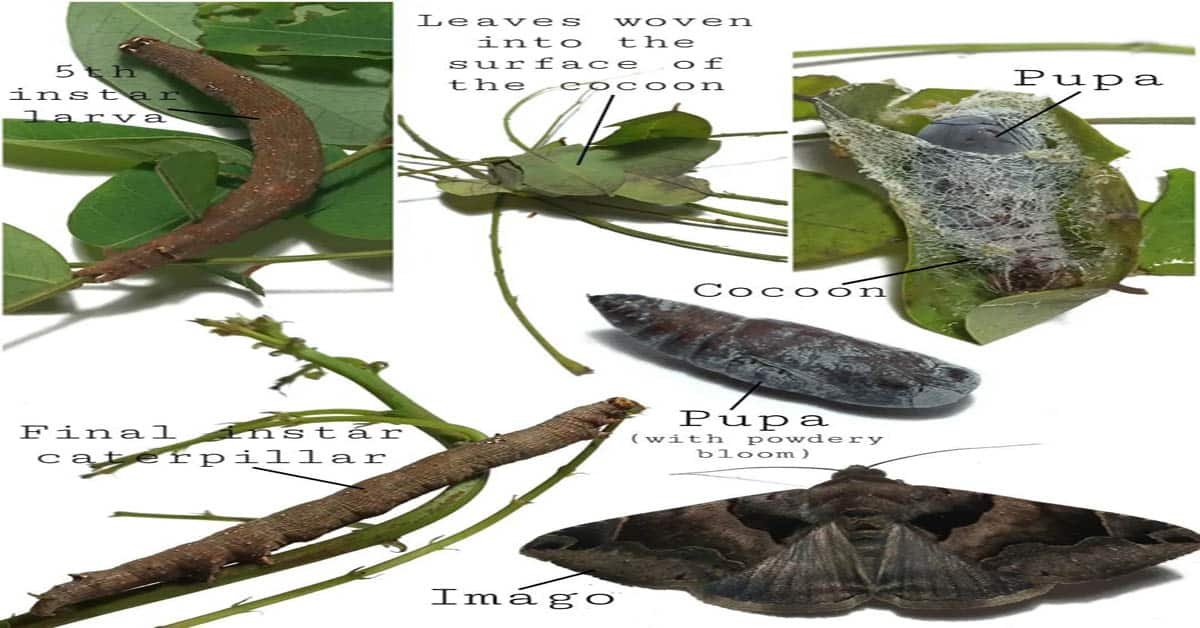
When you think of the delicate dance of life in the natural world, few creatures exemplify transformation as profoundly as the moth. Beyond their nocturnal allure and often understated beauty, understanding the Lifecycle and Biology of Inata Moths offers a window into one of nature's most intricate survival stories. These fascinating insects, belonging to the vast Lepidoptera order, are far more than just "night butterflies"; they are master alchemists, undergoing a complete metamorphosis that redefines existence at every turn. From a tiny, unassuming egg to a magnificent, winged adult, each stage is a testament to adaptation, survival, and the persistent cycle of life.
At a Glance: The Inata Moth's Journey
- Complete Metamorphosis: Inata Moths go through four distinct stages: Egg, Larva (Caterpillar), Pupa, and Adult.
- Egg Stage: Fertilized eggs are laid in safe spots, often on host plants, and develop over weeks or months.
- Larval Stage (Caterpillar): The primary phase for eating and growing, caterpillars consume vast amounts of plant matter and molt several times.
- Pupal Stage: A period of dramatic internal reorganization, often within a protective cocoon, where the caterpillar transforms into the adult form.
- Adult Stage (Imago): The final, reproductive stage, focused on mating and laying eggs, with varying lifespans and feeding habits.
- Ecological Role: Like many moths, Inata Moths are vital pollinators and a key part of food webs.
More Than Just Butterflies of the Night: Understanding Moths
Before we dive into the specific journey of the Inata moth, let's ground ourselves in what makes moths, generally, such remarkable creatures. Often mistaken for butterflies, moths are their evolutionary cousins within the Lepidoptera order, distinguished by several key features. Think multi-colored, often camouflaged wings, furry bodies, prominent eyes, and unique threadlike antennae. They are ecological powerhouses, moths' crucial role as pollinators cannot be overstated, contributing significantly to plant reproduction and the health of balanced ecosystems worldwide. With over 160,000 different species globally, most are completely harmless to humans, quietly carrying out their vital tasks.
Moths, like all insects, don't breathe through lungs. Instead, they respire through a network of tubes called tracheae, which connect to small openings on their exoskeleton known as spiracles. These spiracles absorb oxygen directly from the air, channeling it to their tissues in an incredibly efficient system. This biological blueprint underpins the life of every moth, including the Inata.
The Great Transformation: A Four-Stage Saga
The lifecycle of an Inata moth is a classic example of complete metamorphosis, a biological marvel that involves four distinct and dramatically different stages: Egg, Larva (Caterpillar), Pupa, and finally, the Adult moth (Imago). Each stage has its own purpose, challenges, and incredible adaptations, all designed to ensure the species' survival and propagation.
Stage 1: The Incubation: From Tiny Orb to Budding Life
The journey begins with the egg. Female Inata moths are oviparous, meaning they lay eggs to reproduce, typically 4-7 days after a successful mating. This crucial event usually happens once a year, often in the spring when the air is warm and conditions are optimal for development.
Selecting the right nursery is paramount for the expectant mother. She'll meticulously choose safe locations with an abundant and suitable food source for her future offspring, commonly depositing her eggs on the underside of plant leaves or along stems. While the exact number can vary by species, a female Inata moth might lay up to 50 eggs at a time, often in neat clusters, maximizing the chances of survival for her brood.
Inside each tiny egg, the embryo of the Inata moth develops for approximately 30 days, though this can be influenced by environmental factors. Humid weather is particularly critical for optimal growth and successful hatching. Depending on the species and climate, the egg stage itself can be surprisingly variable, lasting anywhere from a few days to several months. Some eggs even possess the remarkable ability to overwinter, delaying their development until spring's warmth signals the right time to hatch.
Stage 2: The Voracious Feeder: Life as an Inata Caterpillar
Upon hatching from its egg, the Inata moth enters its larval stage, known to most as a caterpillar. This initial emergence is famously called the "first instar," marking the beginning of a relentless period of growth. An Inata caterpillar's life has one overriding purpose: eating, and lots of it! These tiny eating machines consume significant amounts of plant leaves, fungi, or lichens, tirelessly building up the energy reserves necessary for their future transformation.
The the varied dietary habits of caterpillars are truly fascinating. While many Inata caterpillars might prefer specific host plants, some moth species exhibit highly specialized diets. For instance, clothes moths famously consume natural fibers in your wardrobe, while pantry moths target stored grains and cereals. This dietary specialization underscores the diverse niches moths occupy in our ecosystems.
Inata caterpillars possess segmented bodies and multiple pairs of legs, designed for efficient movement and clinging to their food sources. To accommodate their rapid growth, they must shed their rigid outer skin, or exoskeleton, in a process called molting. An Inata caterpillar will typically molt 4-5 times; each shedding signifies a new "instar," meaning it has entered a new developmental phase, growing larger with each successive skin. This cycle of eating and molting continues until the caterpillar reaches its full size and is ready to transition to the next, most mysterious stage: the pupa.
Stage 3: The Great Slumber: Transformation in the Pupa
Before the Inata caterpillar enters its pupa stage, it undertakes a crucial mission: finding a new, safe, and often secluded location. This strategic choice is vital for its survival during a period when it will be entirely vulnerable. Once a suitable spot is found, the caterpillar begins to produce a remarkable material: silk. Using proteins secreted from specialized glands, it spins a protective casing around its body. This intricate silken shell is what we commonly refer to as a cocoon.
Inside the cocoon shell, the magic truly begins. The caterpillar transforms into a pupa, entering a profound state of internal reorganization known as histolysis. During this incredible biological process, the caterpillar's larval tissues literally break down, dissolving into a rich biological soup from which the adult moth's structures will meticulously form. This is a non-feeding, resting stage – a biological pause where the blueprint of the adult moth is painstakingly assembled.
Not all Inata moth species, however, spin elaborate cocoons. Some may incorporate surrounding plant materials into their cocoons for enhanced camouflage, making them incredibly difficult to spot. Others might pupate underground, burrowing into the soil, or find concealed crevices and hollows without forming any visible silken structure at all. The duration of the pupa stage is highly variable for Inata moths, ranging from a few days to an impressive 4-6 months, heavily dependent on the specific species, ambient temperature, and other environmental conditions. It's a testament to nature's patience and precision.
Stage 4: The Reproductive Flight: Emergence as an Adult Moth
After its prolonged stay in the pupa stage, the fully developed adult Inata moth, or imago, finally emerges from its cocoon. This is a dramatic moment, often involving a struggle to break free from the protective casing. Newly emerged, the adult moth typically has a somewhat swollen abdomen and soft, shriveled wings. Over a period of hours, it will pump hemolymph (insect blood) into its wings, causing them to expand and harden. Once the wings are firm and ready, the adult Inata moth takes its first, exhilarating flight.
The primary, and most critical, purpose of the adult Inata moth is reproduction. With the laborious growth and transformation stages behind it, the adult's remaining energy is dedicated to finding a mate and ensuring the next generation. Adult Inata moths have a relatively short lifespan, typically living for 1-3 months, though this varies significantly by species.
Physically, adult Inata moths are characterized by stout bodies, often covered with fine, dust-like scales that can rub off easily. Their antennae are distinct and come in various forms – they can be feathery, thick, or even club-shaped, playing a crucial role in detecting pheromones and navigating their environment. While many adult moths, including some Inata species, are nocturnal, flying under the cover of darkness, the incredible diversity of moth species means that some are diurnal, active during the day.
Their feeding habits as adults also vary considerably. Some Inata moth species may not eat at all, relying solely on the energy reserves accumulated during their caterpillar stage. Others, however, feed on liquid foods to maintain water balance and fuel their short but vital reproductive flights. Common adult moth diets include flower nectar, tree sap, or fluids from rotting fruit. how adult moths sustain themselves is a complex topic that highlights their specialized biology.
Inata moths, like their countless relatives, exhibit a vast diversity in size, color, and patterns. Their wingspans can range from mere millimeters to nearly 30 centimeters for some of the largest species. This incredible variety is not just for show; it often serves crucial functions like camouflage or mimicry.
Habitat and Survival: Where Inata Moths Thrive
Inata moths, like most moth species, can be found in a wide range of habitats across the globe. From dense forests and sprawling grasslands to the challenging tundra regions and even our own backyards and gardens, these environments provide essential shelter and food sources. The presence of specific host plants for their caterpillars is a key determinant of an Inata moth's habitat choice.
Survival in the wild is a constant challenge, and Inata moths have evolved remarkable strategies to avoid becoming prey. Many species possess the ability to mimic other animals, adopting the appearance of wasps, spiders, or even bird droppings to deter predators. This clever form of biological deception is just one of the fascinating strategies moths use to avoid predators. Furthermore, moths are generally attracted to heat, a trait that can sometimes lead them to artificial light sources, inadvertently drawing them into human-dominated spaces.
Supporting the Inata Moth: Small Actions, Big Impact
Understanding the Lifecycle and Biology of Inata Moths isn't just an academic exercise; it empowers us to appreciate their vital role and, where appropriate, support their continued existence. Moths are unsung heroes of our ecosystems, contributing to pollination and forming crucial links in the food chain.
If you're curious about fostering a moth-friendly environment, consider planting native flora that provides food for both adult moths (nectar sources) and their caterpillars (host plants). Reducing pesticide use, especially broad-spectrum insecticides, can also make a significant difference. Observing these creatures in their natural habitat, from the slow munching of a caterpillar to the silent flutter of an adult, connects us to the intricate beauty and resilience of the natural world.
The journey of the Inata moth, from a minuscule egg to a mature adult capable of flight and reproduction, is a powerful reminder of nature's endless capacity for transformation. It's a story of growth, survival, and the persistent drive of life, playing out quietly in the shadows and light around us.
Return to the Inata main hub for more insights into these captivating insects.