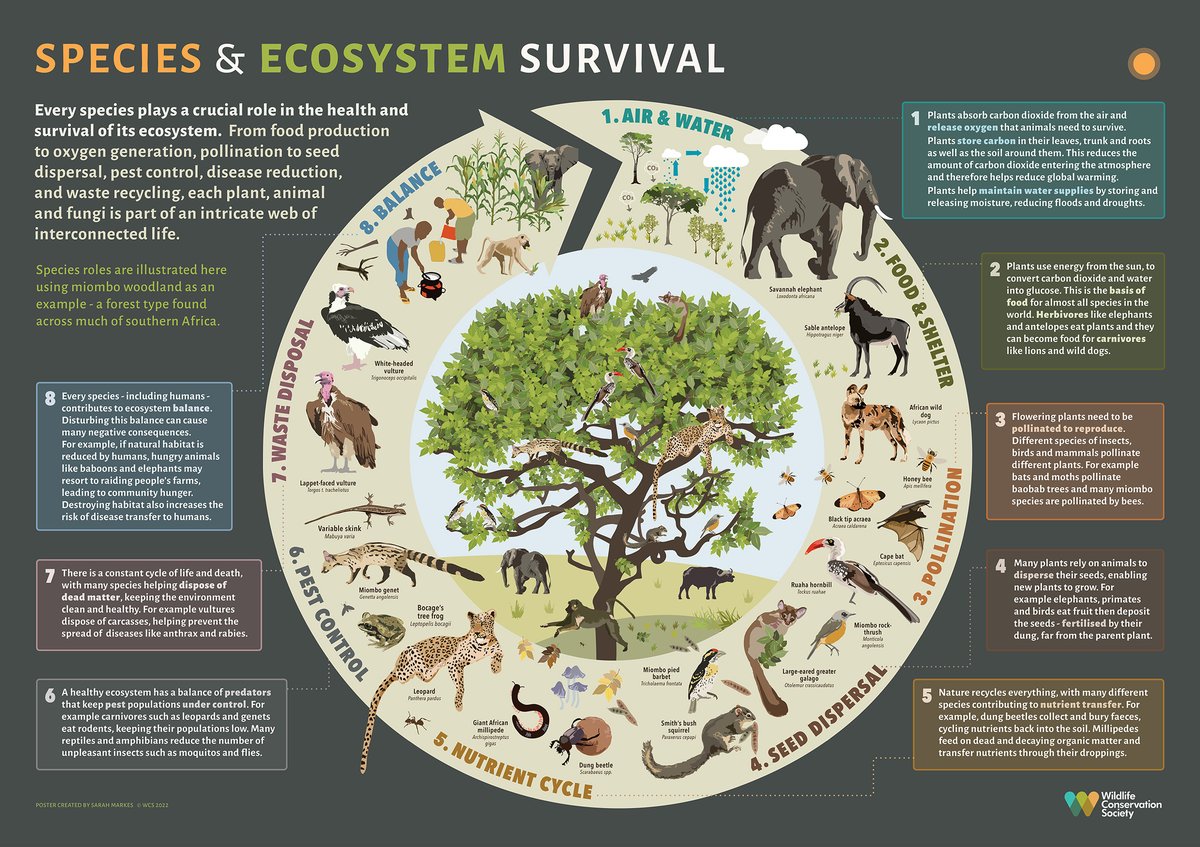
Imagine peering into the intricate web of life, trying to make sense of the myriad organisms that share our planet. One of the most fundamental yet often misunderstood layers of this biological tapestry is the genus, a classification level that groups closely related species. When we talk about "species within the Inata genus," we're delving into a fascinating case study of biological classification, exploring how scientists identify, differentiate, and ultimately understand the distinct life forms that share a common evolutionary branch.
This journey isn't just about cataloging names; it's about uncovering the deep evolutionary connections, unique adaptations, and sometimes surprising relationships that define a group of organisms. While the specific species comprising Inata might be diverse, the principles by which we understand them are universal, reflecting centuries of scientific inquiry and technological advancement.
At a Glance: Understanding Species Within a Genus
- Genus as a Blueprint: A genus like Inata acts as a shared ancestral blueprint, grouping species that are more closely related to each other than to species in other genera.
- Species are the Specifics: Species are the most basic taxonomic unit, representing groups of organisms capable of interbreeding (though this definition has nuances). Within Inata, each species will have its own unique characteristics.
- Dynamic Classification: Biological classification, including the delineation of species within a genus, is not static. New discoveries, especially with advanced genetic tools, frequently refine our understanding.
- The Power of Naming: Every species within Inata receives a unique binomial name (e.g., _Inata species_A, _Inata species_B), a universal scientific identifier.
- Beyond Appearance: Differentiating species often goes beyond what's visible to the eye, relying heavily on genetics, behavior, and ecological roles.
What is a Genus, Anyway? A Foundation for Understanding Inata
Before we explore the individual members of Inata, let's set the stage with a quick refresher on biological classification. In the grand scheme of life, organisms are sorted into a hierarchy of groups based on their evolutionary relationships, a system known as taxonomic rank or nomenclatural rank. Think of it like a series of nested boxes, each containing more specific items than the last.
The widely recognized major ranks descend from broad to specific: domain, kingdom, phylum, class, order, family, genus, and finally, species. The genus (Inata in our case) is a crucial step down this ladder, serving as a direct ancestor to the species level. It groups together organisms that are genetically and morphologically similar enough to suggest a recent common ancestor, yet distinct enough to comprise multiple separate species. For example, the Vulpes genus contains all "true foxes," like the red fox (Vulpes vulpes), distinguishing them from other canids like wolves or coyotes.
When scientists identify a new organism or re-evaluate existing ones, they aim to place it within this hierarchy, either into an existing group or by creating a new one. The goal is always to recognize "natural groups" that reflect true evolutionary relationships, or phylogeny.
The Defining Line: What Makes an Inata Species, an Inata Species?
Pinpointing exactly what constitutes a "species" can be surprisingly complex, especially within a diverse genus like Inata. While the most common definition (the biological species concept) suggests a group that can interbreed and produce fertile offspring, nature often defies simple categorization.
For many organisms within Inata, particularly if they reproduce asexually, or if their biology involves complex chromosomal variants or ecotypes (locally adapted populations), the lines blur. Taxonomists must grapple with these nuances, sometimes lumping genetically incompatible forms together based on other criteria. This ongoing challenge highlights why understanding the species within Inata requires a multifaceted approach.
Beyond Morphology: Tools for Differentiation
Historically, species were primarily identified by visible physical characteristics (morphology). While crucial, this alone isn't always enough, especially for cryptic species (those that look alike but are genetically distinct). Modern taxonomy employs a range of sophisticated tools to differentiate species within a genus like Inata:
- Molecular Systematics (Genetic Analysis): This is arguably the most powerful tool today. By analyzing DNA, RNA, or protein sequences, scientists can determine genetic relatedness and evolutionary divergence. For Inata, molecular data can reveal hidden distinctions between outwardly similar species, confirm relationships, or even suggest that what was once thought to be a single species is, in fact, several. This method, developed in the latter half of the 20th century, has revolutionized our understanding, especially for organisms like viruses, bacteria, and archaea where phenotypic characters are insufficient.
- Reproductive Biology: Observing mating behaviors, compatibility, and the fertility of offspring remains a cornerstone for sexually reproducing Inata species. If two populations within Inata cannot successfully interbreed, they are likely distinct species.
- Ecological Niches: Do different Inata populations occupy different habitats, consume different foods, or respond to environmental factors in unique ways? These ecological distinctions can be strong indicators of separate species.
- Behavioral Studies: For many animals, distinct mating rituals, vocalizations, or social structures can be species-specific, even if physical differences are subtle.
- Biogeography: Where an organism lives can provide clues. Geographically isolated populations of Inata might have diverged into distinct species over time due to different evolutionary pressures.
The Naming Game: How Inata Species Get Their Scientific Labels
Every species within the Inata genus, once identified and validated, receives a unique binomial name. This two-part name, established by Carl Linnaeus, is the universal identifier for that organism, cutting across language barriers. For a species within Inata, it would look something like Inata specificus, where "Inata" is the genus name (always capitalized and italicized) and "specificus" is the specific epithet (always lowercase and italicized).
Consider the red fox, Vulpes vulpes. Here, Vulpes is the genus, and vulpes is the specific epithet. This system ensures clarity and avoids confusion, a critical aspect of biological communication.
The Role of Codes and Type Specimens
The naming process isn't a free-for-all; it's meticulously regulated by international Codes of Nomenclature. For instance, if Inata were an animal, its naming would fall under the International Code of Zoological Nomenclature. If it were a plant, fungus, or alga, the International Code of Nomenclature for algae, fungi, and plants would apply. These codes ensure that names are stable, unambiguous, and follow established conventions.
A crucial part of validating any new Inata species (or subspecies, which sometimes use a trinomial name) is the designation of a type specimen. This is a single, physical organism that serves as the definitive reference for that species' name. It's carefully preserved and housed in a reputable public institution, like a museum or herbarium. If a future scientist questions the identity of an Inata specimen, they can always refer back to the type specimen for definitive comparison. For taxa above species (like the genus Inata itself), the "type" is a representative species within that higher rank.
Inata's Evolutionary Journey: A Glimpse into its Past and Future
The classification of species within Inata isn't just about current differences; it's a reflection of their shared evolutionary history. Early taxonomists like Carl Linnaeus grouped organisms based primarily on observable characteristics. However, the advent of cladistics by Willi Hennig in the mid-20th century transformed taxonomy by emphasizing shared derived characteristics (synapomorphies) to build classifications that explicitly reflect common ancestry.
For the Inata genus, this means understanding the evolutionary tree that connects its various species. Which Inata species are most closely related? Which diverged earliest? Molecular systematics plays a huge role here, allowing scientists to construct detailed phylogenetic trees that map the evolutionary relationships within the genus.
Challenges and the Dynamic Nature of Classification
It's important to remember that classifying species within Inata (or any genus) is a dynamic, ongoing scientific endeavor, not a static list carved in stone. Several challenges inherently make taxonomy a complex field:
- Subjectivity: While governed by rules, assigning ranks and defining species often involves a degree of expert judgment based on "significant dissimilarity." There isn't a single, universally agreed-upon metric for what constitutes a genus or a species, leading to potential disagreements among taxonomists regarding the boundaries of Inata species.
- Evolutionary Mismatch: The hierarchical rank system, while useful, doesn't always perfectly align with the continuous, branching nature of evolution. Superimposing discrete ranks over a continuously evolving lineage can create theoretical difficulties, as even Charles Darwin observed.
- Incomparability: An Inata species is a species, but an Inata genus might not be "equivalent" in age, diversity, or distinctiveness to another genus in a completely different part of the tree of life. Equally ranked higher taxa aren't necessarily comparable across different phyla.
- Enigmatic Taxa (Incertae sedis): Sometimes, an Inata species (or even the genus itself) might have unclear broader relationships within its family or order. When this happens, it's categorized as incertae sedis (of uncertain placement), indicating that more research is needed to firmly place it in the larger taxonomic framework.
As we continue to learn more about the genetic makeup and ecological interactions of organisms, the classification of Inata species will likely continue to be refined. What was once considered a single species might be split into several, or conversely, what were thought to be distinct species might be "lumped" together if new evidence suggests a single interbreeding population. This fluidity is a sign of healthy scientific progress.
Delving Deeper into an Illustrative Inata Species
To bring this all to life, let's consider a hypothetical example: Inata splendidus. This specific species, a member of the Inata genus, might be distinguished by its unique bioluminescent patterns, which differ subtly from other Inata species.
A taxonomist studying Inata splendidus would embark on a detailed process:
- Collecting and Preservation: Carefully collecting specimens of Inata splendidus, ensuring proper preservation techniques are used—which would vary greatly depending on whether Inata is an insect, a plant, or a marine organism.
- Accurate Labeling: Every collected specimen would be meticulously labeled with locality, habitat, date, collector's name, field number, and other crucial data. This ensures the specimen's scientific value for future study.
- Comparative Analysis: Comparing Inata splendidus specimens with known Inata species and other related genera. This would involve morphological analysis (comparing physical structures), genetic sequencing (looking at shared and unique DNA markers), and potentially behavioral observations.
- Description and Publication: If the evidence strongly supports a new species, a formal description would be published in a peer-reviewed scientific journal, detailing its unique characteristics, its relationship to other Inata species, and designating a type specimen.
- Naming Convention: Following the rules of nomenclature, the name Inata splendidus would be established, ensuring it's unique and adheres to the relevant code. (Names of superfamilies in zoology, for instance, end in -oidea, families in -idae, subfamilies in -inae, and tribes in -ini. Botanical ranks above genus are unitary names, while species use binary names.)
This detailed work is how our knowledge about life's diversity grows, one species within a genus at a time. It also helps us understand the broader context of the Inata genus itself, including its distribution, ecology, and evolutionary history. Learn more about Inata and the ongoing efforts to classify its members.
Navigating the Branches: Subspecies, Hybrids, and Expanding Ranks
The classification within a genus isn't always a straightforward "one genus, many species" model. Sometimes, there are further subdivisions or complexities:
- Subspecies: Within a single Inata species, distinct geographically isolated populations might be recognized as subspecies. These are forms that are still capable of interbreeding but show consistent, noticeable differences. They are indicated by a trinomial name, like Inata splendidus orientalis.
- Hybrids: Occasionally, two distinct Inata species might interbreed to produce hybrids. These can be specified by a formula (e.g., *Inata species_A x Inata species_B_) or sometimes given a "nothogenus" name (prefixed with notho).
- Expanded Ranks: When a genus like Inata is particularly diverse, taxonomists might introduce additional ranks to clarify relationships. Prefixes like "sub-," "super-," and "infra-" (e.g., subclass, superorder) are common, as are intermediate ranks like "tribe" or "section," creating an even more granular hierarchy. These expanded ranks help organize very large or complex genera, allowing for finer distinctions among its species.
Understanding these additional layers allows for a more precise and accurate representation of the diversity within the Inata genus, reflecting the nuanced gradations of variation found in nature.
Your Role in Understanding the Natural World
Even if you're not a professional taxonomist, understanding how species within a genus like Inata are classified provides valuable insights. It helps us appreciate the incredible biodiversity of our planet, the meticulous work involved in scientific discovery, and the interconnectedness of all living things.
When you encounter a scientific name, remember that it's more than just a label. It's a key that unlocks a vast amount of information about an organism's evolutionary history, its relationship to others, and its place in the global ecosystem. Supporting scientific research, particularly in areas like biodiversity and systematics, contributes directly to our ability to identify, protect, and understand life on Earth. Every new discovery, every refined classification within a genus like Inata, adds another piece to humanity's grand puzzle of life.